
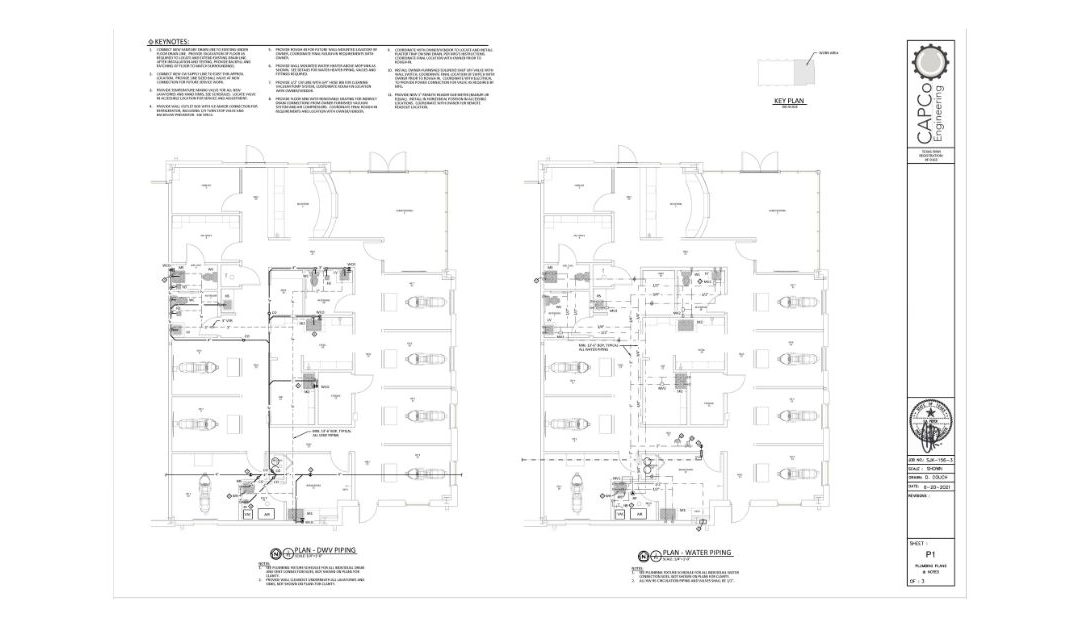
In commercial construction, success depends on coordination. Before steel is erected, concrete is poured, or equipment is installed, one critical element determines whether a project runs smoothly or encounters costly delays: MEP drawings.
MEP drawings — also called MEP plans — serve as the technical roadmap that allows architects, contractors, and subcontractors to work together efficiently. Without properly coordinated MEP plans, even well-designed buildings can experience installation conflicts, budget overruns, and construction delays.
At CAPCo Engineering, we specialize in producing clear, coordinated MEP drawings that help construction teams execute projects accurately, safely, and on schedule. This guide explains everything builders and architects need to know about MEP drawings and why they are essential to modern construction.
What Are MEP Drawings?
MEP drawings are detailed engineering documents that show how a building’s Mechanical, Electrical, and Plumbing systems are designed, routed, and installed.
These drawings communicate critical technical information including:
- Equipment locations
- Ductwork layouts
- Electrical power distribution
- Lighting systems
- Plumbing piping routes
- Fire protection coordination
- System connections and clearances
Created by MEP engineers and designers, these plans ensure that building systems integrate seamlessly with architectural and structural designs.
Simply put:
👉 MEP drawings tell contractors how a building functions behind the walls and ceilings.
They transform design concepts into buildable instructions for field teams.
What Are MEP Plans Used For?
MEP plans are used throughout the entire lifecycle of a construction project — from early design through final installation.
1. Design Coordination
Architects focus on aesthetics and layout, while structural engineers focus on stability. MEP drawings ensure mechanical and electrical systems fit within those designs without conflicts.
2. Construction Execution
Contractors rely on MEP plans to understand:
- Installation sequencing
- Material requirements
- Equipment placement
- Trade coordination
3. Code Compliance
MEP drawings demonstrate compliance with:
- Local building codes
- Energy standards
- Safety regulations
- Mechanical and electrical requirements
4. Project Bidding & Cost Estimating
Accurate drawings allow subcontractors to produce reliable bids, reducing unexpected costs later.
The Three Components of MEP Drawings
Mechanical Drawings (HVAC Systems)
Mechanical plans focus primarily on heating, ventilation, and air conditioning systems.
They include:
- Air distribution layouts
- Equipment schedules
- Exhaust and ventilation systems
- Rooftop units and mechanical rooms
- Temperature control strategies
For large commercial and industrial facilities, mechanical design directly impacts occupant comfort, indoor air quality, and operational efficiency.
Electrical Drawings
Electrical MEP plans define how power moves throughout the building.
Typical electrical drawings show:
- Lighting layouts
- Panel schedules
- Power distribution
- Emergency systems
- Fire alarm coordination
- Low-voltage infrastructure
Well-designed electrical systems ensure reliability, safety, and scalability for future expansion.
Plumbing Drawings
Plumbing drawings manage water supply, drainage, and specialty piping systems.
These plans include:
- Domestic water systems
- Sanitary and storm drainage
- Gas piping
- Equipment connections
- Fire protection coordination
In commercial projects, plumbing design must balance efficiency, safety, and regulatory compliance.
Why MEP Drawings Are Critical for Construction Projects
Prevent Trade Conflicts
One of the biggest causes of construction delays is system interference — when ductwork, piping, and structural components compete for the same space.
Coordinated MEP drawings help prevent issues like:
- Pipes crossing structural beams
- Electrical conduits blocking mechanical access
- Equipment clearance violations
Early coordination saves significant time and money during construction.
Reduce Change Orders
Incomplete or unclear plans often lead to field modifications.
Quality-controlled MEP plans:
- Minimize redesigns
- Reduce RFIs (Requests for Information)
- Prevent installation errors
- Lower contractor liability
For large commercial jobs, avoiding just one major change order can save tens of thousands of dollars.
Improve Construction Speed
Clear drawings allow trades to work confidently and efficiently.
When installers know exactly where systems belong:
- Scheduling improves
- Installation time decreases
- Inspections pass faster
- Project timelines stay on track
Ensure Code Compliance and Safety
MEP engineers design systems to meet regional building codes and safety standards.
This includes compliance with:
- Mechanical codes
- Electrical safety standards
- Energy efficiency requirements
- Ventilation regulations
Properly engineered plans help projects pass inspections without costly revisions.
MEP Drawings for New Construction vs. Retrofit Projects
New Construction Projects
In new builds, MEP drawings establish system coordination from the beginning.
Benefits include:
- Optimized equipment placement
- Energy-efficient system design
- Streamlined construction sequencing
- Future scalability planning
Early engineering involvement reduces long-term operational costs.
Retrofit and Renovation Projects
Retrofit projects introduce unique challenges because existing systems must be integrated into limited space.
MEP plans help by:
- Documenting existing conditions
- Designing around structural constraints
- Minimizing operational disruption
- Updating systems for modern efficiency standards
Experienced engineering teams are especially critical during renovation work.
What Makes High-Quality MEP Drawings?
Not all MEP plans are created equal. High-performing construction teams look for drawings that are:
✅ Clear and easy to interpret
✅ Fully coordinated across disciplines
✅ Code-compliant
✅ Constructible in real-world conditions
✅ Delivered on schedule
At CAPCo Engineering, drawings undergo internal quality-control reviews to ensure contractors receive plans they can build from with confidence.
Who Uses MEP Drawings?
MEP drawings are essential for multiple stakeholders:
- Architects
- General contractors
- Developers
- Facility owners
- Subcontractors
- Project managers
- Inspectors
Because they connect design with execution, MEP plans become one of the most frequently referenced documents on a job site.
Why Architects and Contractors Partner With Experienced MEP Engineers
Large commercial and industrial projects demand speed, accuracy, and coordination. Experienced MEP engineering teams understand how real construction projects operate — not just how systems work in theory.
The right engineering partner helps:
- Reduce risk
- Improve constructability
- Maintain project schedules
- Support contractor workflows
- Deliver scalable system designs
This collaboration is especially important for projects across Texas, New Mexico, and Oklahoma, where climate conditions and regional codes vary significantly.
The Bottom Line: MEP Drawings Keep Projects Moving
MEP drawings are far more than technical diagrams — they are the foundation of a successful construction project.
When properly designed and coordinated, MEP plans:
- Prevent construction conflicts
- Reduce project costs
- Improve safety and compliance
- Accelerate installation timelines
- Support long-term building performance
Whether you’re planning a new commercial facility or upgrading an existing structure, professionally engineered MEP drawings ensure your project moves from concept to completion smoothly.
Work With CAPCo Engineering
CAPCo Engineering provides fast, accurate, and quality-controlled MEP drawings designed for real-world construction success.
Our team supports architects, contractors, and developers with coordinated MEP plans that reduce risk and keep projects on schedule.
Planning a commercial or industrial project? Contact CAPCo Engineering today to discuss your MEP design needs.